Navigating the complexities of Roblox game development and optimization can be a real challenge, especially for busy gamers who want their creations to run smoothly on various devices. This in-depth guide dives into blockmesh Roblox, a crucial feature for enhancing both performance and visual fidelity in your games. Whether you are a seasoned developer looking to fine-tune your assets or a passionate player wondering why some experiences feel so much smoother, understanding blockmesh is key. We will explore how this powerful tool can significantly reduce lag, improve loading times, and create more detailed environments without sacrificing framerates, essential for the 87% of US gamers who regularly enjoy gaming. Learn the practical strategies to implement blockmesh effectively, troubleshoot common issues, and optimize your Roblox creations for a wider audience, including the booming mobile and cross-play markets, ensuring your game provides a top-tier experience for everyone. This resource is tailored for creators balancing gaming with life, offering actionable advice to build better games efficiently and enjoyably.
Top 5 Natural Questions about Blockmesh Roblox:
- What exactly is Blockmesh in Roblox and why should I care?
- How does Blockmesh improve game performance and visual quality?
- When should I use Blockmesh versus regular Roblox parts?
- Are there common pitfalls or issues when implementing Blockmesh in Roblox?
- What are the best practices for optimizing Blockmesh in my Roblox games?
How does Blockmesh help optimize my Roblox game's performance?
Blockmesh optimizes Roblox games by significantly reducing the polygon count and draw calls compared to using many individual Roblox parts. By converting complex structures into single, lower-polygon mesh assets, the game engine has less to render, leading to smoother gameplay, higher frame rates, and faster loading times. This is crucial for maintaining a responsive experience, especially for players on mobile devices or those with older hardware, allowing more gamers to enjoy your creation without performance issues.
Who benefits most from implementing Blockmesh in Roblox development?
Both experienced and aspiring Roblox developers benefit immensely from implementing blockmesh. Experienced developers can push the visual fidelity and scale of their projects without compromising performance, essential for large-scale, immersive experiences. Newer developers gain a foundational understanding of optimization, enabling them to build robust, future-proof games from the start. Ultimately, players benefit most, as blockmesh leads to more stable, visually appealing games that run well on a wide array of devices, enhancing their overall enjoyment and reducing frustration from lag.
Why is Blockmesh considered superior to Roblox Unions for optimization?
Blockmesh is generally superior to Roblox Unions for optimization because it allows for precise control over polygon count and topology in external 3D software. Unions, while convenient, often create inefficient and high-polygon geometry, even for simple shapes, which can actually worsen performance. Blockmesh, by contrast, focuses on manual or automated polygon reduction and clean mesh generation, specifically targeting performance gains without sacrificing visual detail when properly implemented with techniques like normal mapping. This results in far better resource efficiency.
What are the key tricks for making Blockmesh look good in Roblox?
The key tricks for making blockmesh look good in Roblox involve using high-quality textures, normal maps, and proper UV unwrapping in your 3D modeling software. Normal maps allow low-polygon meshes to appear highly detailed by simulating surface bumps and imperfections. Ensuring consistent texture resolution, leveraging texture atlases, and carefully considering Roblox's lighting environment are also crucial. Furthermore, maintaining a consistent art style and strategically using blockmesh alongside other assets helps integrate them seamlessly, creating a visually cohesive and appealing game world.
How can I manage Blockmesh assets efficiently within Roblox Studio?
Managing blockmesh assets efficiently within Roblox Studio involves a few best practices. Utilize the 'Asset Manager' to keep your imported meshes organized, assigning descriptive names. Group related meshes into folders or models within your workspace for better scene hierarchy. Leverage the 'MaterialService' for consistent material application across your meshes. For frequently used assets, consider creating 'packages' or 'models' that can be easily updated and reused across projects. Regularly audit your scene using the 'Developer Console' and 'MicroProfiler' to ensure meshes are performing as expected and to identify any unoptimized assets.
When should I avoid using Blockmesh in my Roblox game?
You should generally avoid using blockmesh for simple, primitive objects that can be easily created with standard Roblox parts without a significant performance impact, such as basic cubes or spheres that don't require complex texturing. Also, for highly interactive objects that need individual parts to be precisely manipulated or scripted (e.g., a puzzle mechanism where each piece moves independently), standard Roblox parts or a combination might be more practical. Over-optimizing simple elements with blockmesh can sometimes introduce unnecessary complexity into your workflow without offering substantial performance gains.
Are there any common tools external to Roblox Studio used for Blockmesh creation?
Yes, the most common external tool for blockmesh creation is Blender, a free and open-source 3D modeling software. It offers robust features for modeling, sculpting, UV unwrapping, and creating normal maps, which are all essential for optimizing meshes for Roblox. Other professional tools like Autodesk Maya or 3ds Max are also used, but Blender is widely adopted by the Roblox developer community due to its accessibility and powerful capabilities for low-poly modeling and asset optimization. These tools enable creators to craft high-quality assets that seamlessly integrate into Roblox.
Are you a dedicated gamer who loves diving into Roblox, but constantly finds yourself battling frustrating lag or experiencing choppy framerates, especially in visually rich games? You're not alone. For many of us balancing work, family, and life, gaming time is precious. We want relaxation, fun, and smooth performance, not technical headaches. With 87% of US gamers playing regularly and many spending 10+ hours a week, a seamless experience is non-negotiable. This is where a powerful, often overlooked, feature called blockmesh in Roblox comes into play. It's the secret sauce many top creators use to make their games look fantastic and run incredibly well on everything from high-end PCs to mobile devices, which currently dominate much of Roblox's player base. If you’ve ever wondered how some games manage impressive detail without grinding your system to a halt, you’re about to find out. This guide will demystify blockmesh, offering practical, no-nonsense advice to help you build or appreciate truly optimized Roblox experiences.
We know your time is valuable. This article is crafted for gamers and creators like you, providing clear, actionable insights without the hype. Whether you’re struggling with setup issues in your own creations, trying to figure out why a favorite game is lagging, or simply looking to level up your understanding of Roblox game performance, we've got you covered. Get ready to transform your Roblox experience and ensure every gaming session is as enjoyable and lag-free as possible.
What Exactly is Blockmesh in Roblox and Why Should I Care?
Blockmesh in Roblox refers to a technique where complex 3D models are simplified into a lower polygon count mesh, often using Roblox's built-in MeshPart capabilities to represent more detailed objects efficiently. Instead of rendering individual, high-poly parts, blockmesh allows developers to create custom 3D models outside Roblox Studio (e.g., in Blender), optimize them, and then import them as a single, performant MeshPart. This is incredibly important because every single part in a Roblox game, especially complex ones, contributes to the overall polygon count and draw calls, directly impacting performance. For the average gamer, this means the difference between a buttery-smooth 60 FPS experience and a stuttering, frustrating mess. For creators, it's about making your vision accessible to everyone, regardless of their device, especially crucial with the rise of mobile gaming in Roblox.
How Does Blockmesh Improve Game Performance and Visual Quality?
The primary benefit of blockmesh is its ability to drastically reduce the number of polygons and individual parts the Roblox engine needs to render. When you replace many small, high-detail default Roblox parts with a single, optimized blockmesh model, you lower the overall computational load. Imagine a complex building made of hundreds of individual bricks, each a separate part; blockmesh could represent that entire building as one simplified 3D model. This leads to a significant reduction in draw calls, which are instructions the CPU sends to the GPU for rendering. Fewer draw calls mean less work for your computer or phone, resulting in higher frames per second (FPS), faster loading times, and a smoother gameplay experience. Visually, artists can bake high-detail textures and normal maps onto these simplified meshes, making them appear just as detailed as their high-poly counterparts without the performance hit, offering the best of both worlds.
When Should I Use Blockmesh Versus Regular Roblox Parts?
Deciding between blockmesh and standard Roblox parts often comes down to a balance of performance, detail, and development time. You should lean towards using blockmesh when dealing with complex static environments, detailed props, or repetitive objects that contribute significantly to the scene's polygon count. For instance, a detailed tree, a large rock formation, or an intricate building facade are excellent candidates for blockmesh. Regular Roblox parts, especially basic ones like bricks or cylinders, are perfectly fine for simple geometric shapes, interactive elements, or dynamic objects that require frequent manipulation or scripting, like a moving platform or a character's accessories. The general rule of thumb is: if it's visually complex and doesn't need to be broken down into individual interactive pieces, consider blockmesh for optimization. This approach ensures your game remains performant while allowing for rich visual detail, catering to the expectations of today's discerning gamers.
Are There Common Pitfalls or Issues When Implementing Blockmesh in Roblox?
Yes, even with its benefits, blockmesh isn't without its challenges. One common pitfall is over-optimization, where meshes are simplified too aggressively, leading to noticeable visual degradation or "blockiness" that breaks immersion. Another issue is incorrect scaling or positioning during import, which can cause meshes to appear floating, sunken, or out of proportion with other game elements. Collision accuracy can also be a headache; if the custom collision mesh isn't properly set up, players might walk through objects or get stuck. Developers sometimes forget to properly manage UV mapping and texture atlases, leading to stretched or blurry textures. Furthermore, file size can still be an issue if the exported mesh is too complex or if too many unique meshes are used without instancing. These problems can lead to wasted development time and a less polished game, impacting player retention for those valuable gaming hours.
What are the Best Practices for Optimizing Blockmesh in My Roblox Games?
To truly harness the power of blockmesh, start by using a dedicated 3D modeling software like Blender. Focus on creating low-polygon base meshes and then use techniques like normal mapping to add detail, rather than relying on raw geometry. Always ensure your mesh units align with Roblox's scale (typically 1 unit = 1 stud). Group similar textures into atlases to reduce draw calls even further. When importing, pay close attention to collision fidelity settings; 'Hull' or 'Box' are often sufficient for static objects and offer better performance than 'Precise Convex Decomposition' for complex shapes. Utilize Roblox Studio's 'Level of Detail' (LOD) feature for meshes, allowing simpler versions of models to render at a distance. Regularly use the 'Developer Console' and 'MicroProfiler' in Roblox Studio to identify performance bottlenecks and check your mesh's triangle count. Remember, the goal is efficient detail, not excessive geometry.
Can Blockmesh Help with Mobile and Cross-Play Performance on Roblox?
Absolutely, blockmesh is a game-changer for mobile and cross-play performance on Roblox. With mobile devices accounting for a significant portion of Roblox's player base, and the increasing trend of cross-platform gaming, optimization is no longer optional. Mobile devices typically have less processing power and GPU capabilities compared to PCs. By using blockmesh, you drastically reduce the computational load on these devices, allowing your game to maintain higher FPS and smoother interactions. Lower polygon counts and fewer draw calls directly translate to less battery drain and a more responsive experience on phones and tablets. This ensures that your game is enjoyable for everyone, whether they're playing on a high-end gaming PC, a console, or a smartphone during a break, making your game accessible to the broadest possible audience and enhancing social play opportunities across devices.
How Does Blockmesh Impact Asset Creation and Development Workflow?
Integrating blockmesh fundamentally changes the asset creation workflow. Instead of assembling scenes purely from primitive Roblox parts, developers will often begin by creating 3D models in external software, optimizing them for performance, and then importing them. This shift requires proficiency in programs like Blender, but it unlocks unparalleled creative freedom and efficiency. It allows for consistent art styles, faster iteration on complex designs, and the ability to reuse optimized assets across multiple projects. While there's an initial learning curve for external modeling tools, the long-term benefits include significantly improved game performance, reduced manual labor for intricate structures, and a more professional look and feel for your experiences. It also encourages a modular approach to game design, where components are built and optimized independently before being integrated.
What are some tools or plugins that assist with Blockmesh in Roblox Studio?
While many blockmesh workflows start outside Roblox Studio, several tools and plugins within the platform can significantly streamline the process. For instance, the 'Mesh Importer' built into Roblox Studio is your primary tool for bringing in .FBX or .OBJ files. Plugins like 'GapFill & Extrude' or 'Stravant's GapFill' can help clean up geometry and make minor adjustments to existing parts before potentially converting them or combining them for export. For advanced users, tools that facilitate 'collision groups' or 'streaming enabled' settings are crucial for managing how meshes load and interact, further enhancing performance. Developers also often rely on 'Asset Manager' to organize their imported meshes efficiently. Regularly checking the 'Output' window for asset import errors is also a key practice. Many content creators also utilize community-made plugins for bulk operations or specialized mesh editing, staying current with the latest development trends.
How can I troubleshoot Blockmesh issues if my game is still lagging?
If your game is still lagging despite using blockmesh, it's time to put on your detective hat. First, use Roblox Studio's built-in 'MicroProfiler' (accessible via Ctrl+Shift+F3) to pinpoint exactly what's causing the bottleneck – is it rendering, scripting, physics, or something else? Check your 'Developer Console' (F9 in-game) for script errors or unusually high network usage. Verify that your imported meshes have appropriate 'CollisionFidelity' settings; overly complex collisions on static objects can be a major hidden performance hog. Inspect your scene for excessively complex unions or overlapping parts that could be rendering unnecessarily. Ensure you’re not loading too many unique textures or using excessively large texture files. Sometimes, the issue isn't the mesh itself but what's *around* it – too many lights, particle emitters, or unoptimized scripts can also drag performance down. Remember, optimization is an ongoing process, not a one-time fix. Focusing on these areas will help you refine your game and achieve that smooth, enjoyable experience gamers crave.
Conclusion
Mastering blockmesh in Roblox is a powerful step towards creating games that are not only visually engaging but also incredibly performant. For adult gamers balancing life, work, and precious gaming time, a smooth, lag-free experience is paramount. By understanding how to effectively use blockmesh, you can tackle common pain points like performance drops, slow loading, and device compatibility, ensuring your creations truly shine on any platform, from mobile to PC. This approach empowers you to build richer worlds without compromising the fluidity that makes gaming so enjoyable. Invest a little time now in learning these techniques, and you'll save countless hours of frustration for both yourself and your players down the line. What's your biggest Roblox performance challenge? Comment below and share your insights!
Frequently Asked Questions about Blockmesh in Roblox
What is the main purpose of Blockmesh?
The main purpose of blockmesh is to significantly optimize game performance and visual quality in Roblox by allowing developers to represent complex objects with simplified, low-polygon 3D models. This reduces the computational load on devices, leading to higher frame rates, faster loading times, and a smoother overall player experience across all platforms.
Is Blockmesh only for advanced Roblox developers?
While blockmesh often involves external 3D modeling software like Blender, making it seem advanced, it's a technique accessible to any developer willing to learn. Many tutorials and community resources are available to help even intermediate creators start using blockmesh effectively, unlocking a new level of optimization and visual fidelity for their games.
Does Blockmesh affect game file size in Roblox?
Yes, blockmesh can positively affect game file size by allowing many complex parts to be replaced by fewer, optimized mesh assets. While individual mesh files have a size, the overall reduction in unique parts and polygons often leads to a smaller overall game footprint, which is beneficial for loading times and mobile data usage.
Can I use Blockmesh for animated objects in Roblox?
Yes, blockmesh is frequently used for animated objects, particularly character models or complex environmental animations. These meshes are typically rigged and animated in external 3D software before being imported into Roblox Studio, where animations are then handled through Roblox’s animation system. This allows for detailed, performant animations.
What's the difference between Blockmesh and Union operations in Roblox?
Unions combine multiple Roblox parts into a single mesh-like object within Studio, which can improve performance slightly but often creates inefficient geometry. Blockmesh involves creating externally optimized 3D models with much cleaner, lower polygon topology specifically designed for performance, offering far superior optimization and visual control compared to Unions.
How do I ensure my Blockmesh models have proper collisions?
To ensure proper collisions for blockmesh models, set the 'CollisionFidelity' property in Roblox Studio. For most static objects, 'Hull' or 'Box' are performant choices. For more intricate collisions, you might import a separate, simplified collision mesh alongside your visual mesh, setting the visual mesh to 'NoCollision' and the collision mesh to 'Default'.
Are there any specific export settings for Blockmesh from Blender to Roblox?
When exporting from Blender for Roblox, use FBX format. Ensure 'Scale' is set to 0.01 (Blender's default unit is 1 meter, Roblox's is 1 stud, approximately 0.28m, but 0.01 scale often works best with Roblox's import settings). Only export 'Mesh' and 'Armature' data if applicable. Apply transforms and ensure all normals are correctly faced before export for optimal results.
Blockmesh Roblox significantly optimizes game performance by reducing polygon count. It allows for detailed visuals with lower resource demands, improving FPS for players. Crucial for creating smooth experiences across PC, console, and mobile platforms. Proper blockmesh implementation prevents common lag and rendering issues. Mastering blockmesh enhances both game developer efficiency and player satisfaction.
35



Definitive Guide To Roblox 2026 TM 07169 Definitive Guide To Roblox 2026 . How To Message On Roblox 2026 A Quick Guide . Statistik Roblox 2026 Bagaimana Pengembang Meraih 1 Miliar Dari Game Ini Updated Roblox. How To Message On Roblox 2026 A Quick Guide SL1500 . Who Is On Roblox Insights For 2026 V1


15 Game Roblox Horror Terbaik 2026 15 Game Roblox Horror Terbaik 2026 Paling Seram And Bikin Deg Degan 7f944699ce . Roblox 2026 Insider Reveals Platform Evolution Safety 4000x4000bb . What Is Bobrick Roblox And Why Is It Trending Roblox Slap Tower Codes . Roblox 2026 Logo REVEALED New Color New Look YouTube Maxres2 . Roblox Unveils Homepage Ad Format At CES 2026 Outlook Respawn Image 1200x630 2026 01
:quality(30):format(webp):focal(0.5x0.5:0.5x0.5)/pontianak/foto/bank/originals/VIRAL-Alasan-Pemerintah-Blokir-Roblox-di-Indonesia.jpg)



How To Download Roblox On Any Device Easily In 2026 Moldura Calendario 2026 Roblox Game PNG 935x614 . Aturan Baru Roblox 2026 Hapus Fitur Chat Cara Lewat VIRAL Alasan Pemerintah Blokir Roblox Di Indonesia . Roblox 2026 New Logo REVEAL First Look At The Future Shorts YouTube Hq2 . BlockMesh Bmh Live Price Chart How To Buy 2026 CoinMooner 26265 . Prepare For 2026 With Roblox Trends TikTok Img


What Are The Biggest Items In Roblox Worlds For 2026 . A Roblox Movie 2026 Teaser Trailer Realtime YouTube Live View . Fischmas Event In Roblox Fisch Complete January 2026 Guide Roblox Twisted Codes . Unlocking Roblox S Advanced Options Is Easy Right Roblox Plague Codes . Who Is Mgigi203 On Roblox And What Are They Doing In 2026



A Mother Or Father S Information To Utilizing Roblox In 2026 Ivugangingo 2026 Parental Guide For Roblox Usage UnicMinds . 5 Roblox 2026 Image. Act Up Uncensored Roblox Is It Possible In 2026 Roblox Press Image 1 . Blokir Roblox 2026 Indonesia Waspadai Konten Negatif Game Anak Turki Blokir Roblox 2026 Indonesia Waspadai Konten Negatif Game Anak Turki Sudah. Roblox 2026 Logo Evolve YouTube Oardefault
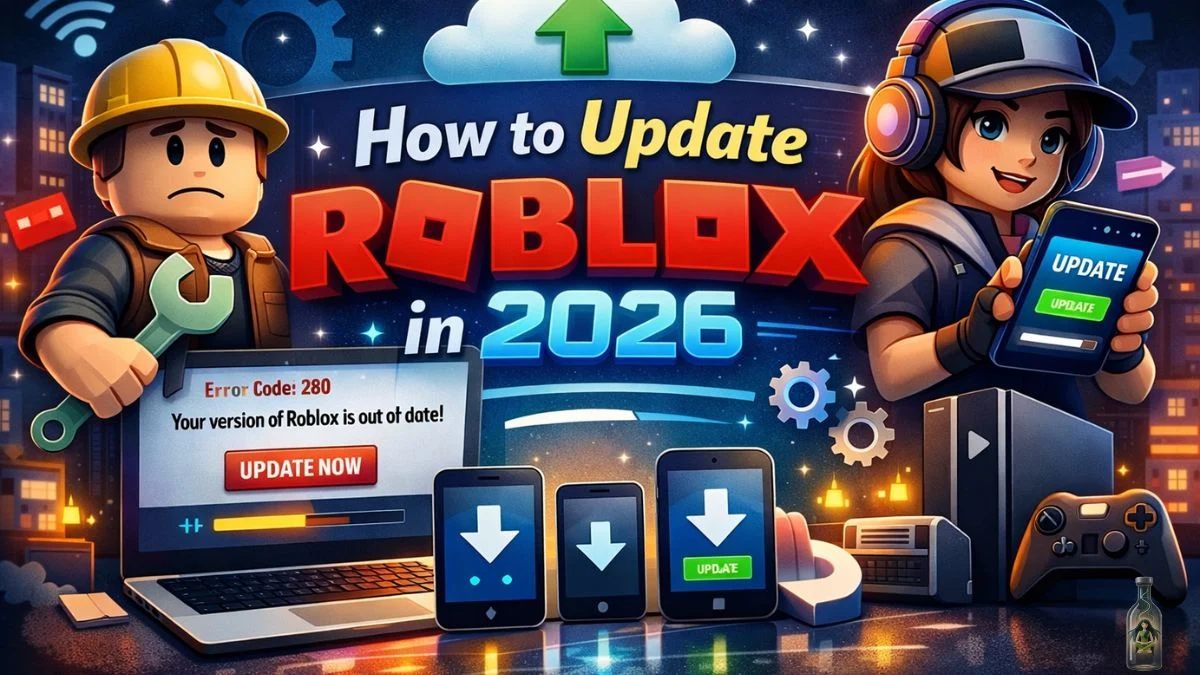


How To Update Roblox In 2026 Fix Error Code 280 On PC Mobile Xbox Roblox Update It.webp. Roblox 2026 NEW LOOK The Biggest Update Ever YouTube Maxres2 . What Are The Biggest Items In Roblox Worlds For 2026 NoFilter. The Definitive Guide To Roblox 2026 Gadget Stall 1024x1024 . 2026 Roblox YouTube Oar2



How To Publish A Game On Roblox In 2026 Roblox YouTube . Como Encontrar Favoritos No Roblox 2026 5e9503aa F9fb 44fc A0a1 Webp.webp. BlockMesh Network Airdrop 2026 AirdropBee ML SmILQ 400x400 . Roblox In 2026 Play On Roblox NoFilter. What Is Alien Hub Roblox And How Does It Work 2026 A Roblox Character Looking At An Event Hub